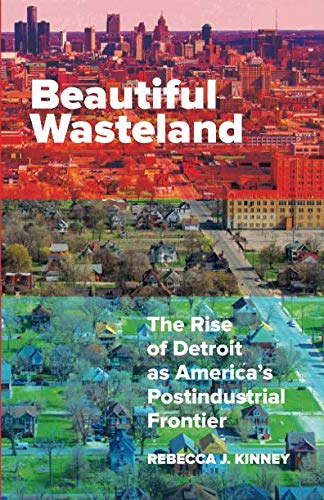


Beautiful Wasteland: The Rise of Detroit as America's Postindustrial Frontier
Book Details
Author(s)
Rebecca J. Kinney
Publisher
University of Minnesota Press
ISBN / ASIN
0816697574
ISBN-13
9780816697571
Availability
Usually dispatched within 4-5 business days
Sales Rank
#99,999,999
Category
Social Science
Marketplace
India 🇮🇳
Ratings & Reviews
No reviews yet — be the first!
No reviews yet.
Description
According to popular media and scholarship, Detroit, the once-vibrant city that crumbled with the departure of the auto industry, is where dreams can be reborn. It is a place that, like America itself, is gritty and determined. It has faced the worst kind of adversity, and supposedly now its back. But what does this narrative of new Detroitleave out? Beautiful Wasteland reveals that the contemporary story of Detroits rebirth is an upcycled version of the American Dream, which has long imagined access to work, home, and upward mobility as race-neutral projects. Theyre not. As Rebecca J. Kinney shows, the narratives of Detroits rise, decline, and potential to rise again are deeply steeped in material and ideological investments in whiteness. By remapping the narratives of contemporary Detroit through an extension of Americas frontier mythology, Kinney analyzes a cross-section of twentieth and twenty-first century cultural locations-an Internet forum, ruin photography, advertising, documentary film, and print and online media. She illuminates how the stories we tell about Detroit as a frontier of possibility enable the erasure of white privilege and systemic racism. By situating Detroit as a beautiful wasteland,both desirable and distressed, this shows how the narrative of ruin and possibility form a mutually constituted relationship: the city is possible precisely because of its perceived ruin. Beautiful Wasteland tackles the key questions about the future of postindustrial America. As cities around the country reckon with their own postindustrial landscapes, Rebecca Kinney cautions that development that elides considerations of race and class will only continue to replicate uneven access to the city for the poor, working class, and people of color.


