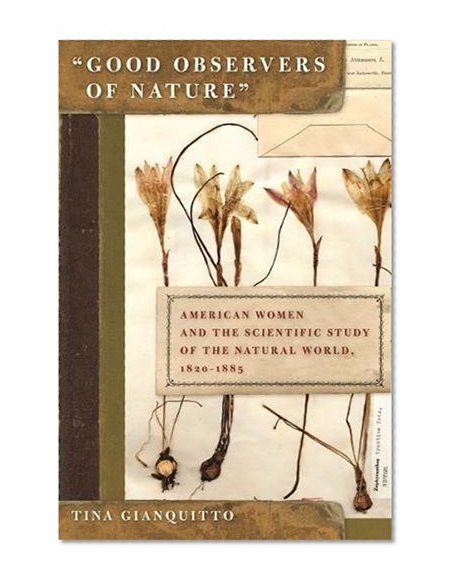


Good Observers of Nature: American Women and the Scientific Study of the Natural World, 1820-1885
No reviews yet.
Many women writers of this period used the natural world as a platform for discussing issues of domesticity, education, and the nation. To what extent, asks Gianquitto, did these writers challenge the prevalent sentimental narrative modes (like those used in the popular flower language books) and use scientific terminology to describe the world around them? The book maps the intersections of the main historical and narrative trajectories that inform the answer to this question: the changing literary representations of the natural world in texts produced by women from the 1820s to the 1880s and the developments in science from the Enlightenment to the advent of evolutionary biology. Though Gianquitto considers a range of women's nature writing (botanical manuals, plant catalogs, travel narratives, seasonal journals, scientific essays), she focuses on four writers and their most influential works: Almira Phelps (Familiar Lectures on Botany, 1829), Margaret Fuller (Summer on the Lakes, in 1843), Susan Fenimore Cooper (Rural Hours, 1850), and Mary Treat (Home Studies in Nature, 1885).
From these writings emerges a set of common concerns about the interaction of reason and emotion in the study of nature, the best vocabularies for representing objects in nature (local, scientific, or moral), and the competing systems for ordering the natural world (theological, taxonomic, or aesthetic). This is an illuminating study about the culturally assumed relationship between women, morality, and science.

