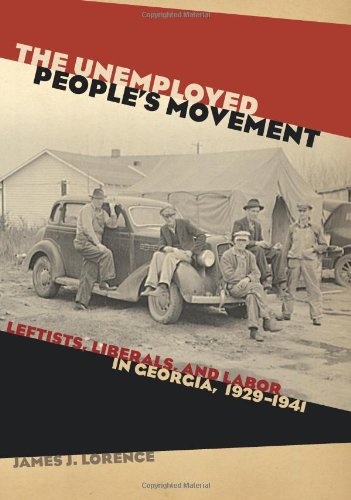


The Unemployed People's Movement: Leftists, Liberals, and Labor in Georgia, 1929-1941 (Politics and Culture in the Twentieth-Century South)
Book Details
Description
Drawing on extensive archival research, including newly accessible records of the Communist Party of the United States, Lorence details interactions between various institutional and grassroots players, including organized labor, the Communist Party, the Socialist Party, liberal activists, and officials at every level of government. He shows, for example, how the Communist Party played a more central role than previously understood in the organization of the unemployed and the advancement of labor and working-class interests in Georgia. Communists gained respect among the jobless, especially African Americans, for their willingness to challenge officials, help negotiate the welfare bureaucracy, and gain access to New Deal social programs.
Lorence enhances our understanding of the struggles of the poor and unemployed in a Depression-era southern state. At the same time, we are reminded of their movement's lasting legacy: the shift in popular consciousness that took place as Georgians, "influenced by a new sense of entitlement fostered by the unemployed organizations," began to conceive of new, more-equal relations with the state.
More Books by James J. Lorence

