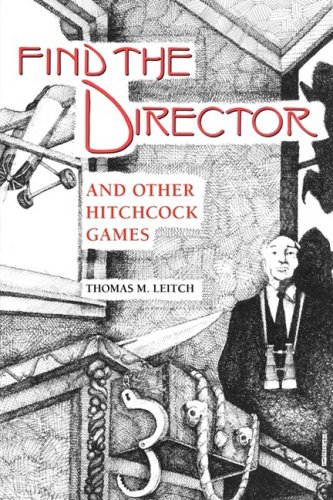


Find the Director and Other Hitchcock Games
A crucial aspect of the director's gameplaying, Leitch contends, emerges in the way he repeatedly redefines the rules. Leitch divides Hitchcock's career into key periods in which one set of games gives way to another, reflecting changes in the director's concerns and the conditions under which he was making movies at the time. For example, the films of his late British period (the original Man Who Knew Too Much, The 39 Steps, The Lady Vanishes) pivot on witty situational games that continually surprise the viewers; the American films that followed in the next decade (Rebecca, Notorious, The Paradine Case) depend more on drawing the viewer into a close identification with a central character and that character's plight. These films in turn are followed by such works as Rope and Strangers on a Train, in which cat-and-mouse games--between characters, between Hitchcock and the characters, between Hitchcock and the audience--are the driving force. By repeatedly redefining what it means to be a Hitchcock film, Leitch explains, the director fosters a highly ambivalent attitude toward such concerns as the value of domesticity, the loss of identity, and the need for--and fear of--suspenseful apprehension.
