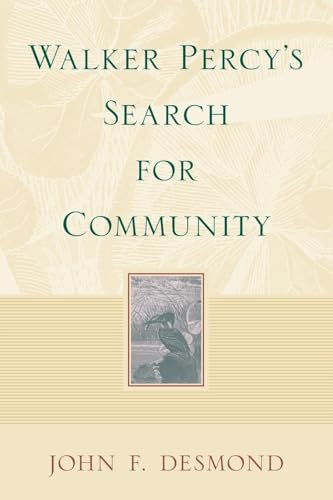


Walker Percy's Search for Community
No reviews yet.
Desmond shows how Percy's theosemiotic outlook shaped each of his novels, from The Moviegoer (1961) to The Thanatos Syndrome (1987), and provided a foundation for his analysis of alienation, his critique of scientism, and his vision of community. Percy's vision of community extended from the flawed social world of modern America and Western society to the mystical community beyond time and place prophesied in the Hebrew-Christian scriptures. This vision grew more explicit as Percy's novelistic career unfolded and was of a piece with the ideas developed in his many essays and in his "self-help" parable, Lost in the Cosmos (1983).
Percy saw himself as a witness to the collapse of scientific humanism in the face of consumerism, self-absorption, and violence. However, Desmond says, Percy also looked forward to a reconciliation of science, religion, and art. In one of his last public lectures, "The Fateful Rift: The San Andreas Fault in the Modern Mind," Percy called for a "new anthropology" based on a Peircean realism that accurately accounted for man's true nature as a wayfarer on a journey with others toward God. This call is echoed in the novels, in which, according to Desmond, Percy explores his vision of community "through representation of the shattered and deformed state of society and the searching of his protagonists, and through suggesting possibilities for healing their riven state."