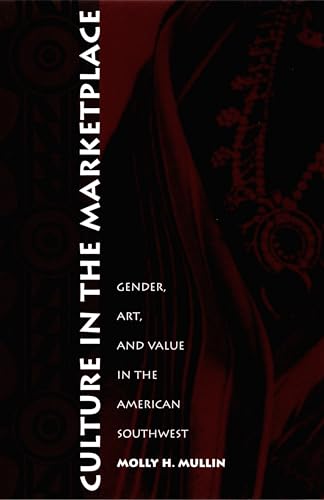


Culture in the Marketplace: Gender, Art, and Value in the American Southwest (Objects/Histories)
Book Details
Author(s)
Molly H. Mullin
Publisher
Duke University Press Books
ISBN / ASIN
0822326108
ISBN-13
9780822326106
Availability
Usually ships in 24 hours
Sales Rank
#4,050,317
Category
Hardcover
Marketplace
United States 🇺🇸
Description
In the early twentieth century, a group of elite East coast women turned to the American Southwest in search of an alternative to European-derived concepts of culture. In Culture in the Marketplace Molly H. Mullin provides a detailed narrative of the growing influence that this network of women had on the Native American art market—as well as the influence these activities had on them—in order to investigate the social construction of value and the history of American concepts of culture.
Drawing on fiction, memoirs, journalistic accounts, and extensive interviews with artists, collectors, and dealers, Mullin shows how anthropological notions of culture were used to valorize Indian art and create a Southwest Indian art market. By turning their attention to Indian affairs and art in Santa Fe, New Mexico, she argues, these women escaped the gender restrictions of their eastern communities and found ways of bridging public and private spheres of influence. Tourism, in turn, became a means of furthering this cultural colonization. Mullin traces the development of aesthetic worth as it was influenced not only by politics and profit but also by gender, class, and regional identities, revealing how notions of “culture†and “authenticity†are fundamentally social ones. She also shows how many of the institutions that the early patrons helped to establish continue to play an important role in the contemporary market for American Indian art.
This book will appeal to audiences in cultural anthropology, art history, American studies, women’s studies, and cultural history.
Drawing on fiction, memoirs, journalistic accounts, and extensive interviews with artists, collectors, and dealers, Mullin shows how anthropological notions of culture were used to valorize Indian art and create a Southwest Indian art market. By turning their attention to Indian affairs and art in Santa Fe, New Mexico, she argues, these women escaped the gender restrictions of their eastern communities and found ways of bridging public and private spheres of influence. Tourism, in turn, became a means of furthering this cultural colonization. Mullin traces the development of aesthetic worth as it was influenced not only by politics and profit but also by gender, class, and regional identities, revealing how notions of “culture†and “authenticity†are fundamentally social ones. She also shows how many of the institutions that the early patrons helped to establish continue to play an important role in the contemporary market for American Indian art.
This book will appeal to audiences in cultural anthropology, art history, American studies, women’s studies, and cultural history.