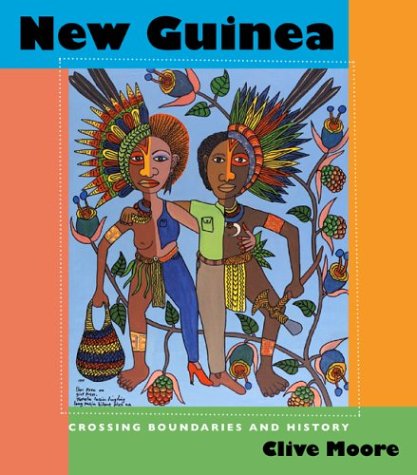


New Guinea: Crossing Boundaries and History
No reviews yet.
The volume opens with a look at the Melanesian region--the basic physical geography and prehistoric periods of settlement, agricultural development, and expansion and the nature of trade networks and population movements--arguing that interlocking exchange systems and associated human interchanges are the "invisible government" through which New Guinea societies operate. Succeeding chapters review the history of encounters between outsiders and New Guinea's populations. They consider the history of Malay involvement with New Guinea over the past two thousand years, demonstrating the extent to which west New Guinea in particular was incorporated into Malay trading and raiding networks prior to Western contact. The European incursion--beginning with the Portuguese and Spanish in the early sixteenth century, the Dutch a century later, and the British from the late 1700s--is examined in light of early trading engagements and the development of more formal trade networks, the history of the Melanesian labor trade, and the role of violence in European and New Guinean relations. The impact of colonial rule, economic and social change, World War II, decolonization, and independence are discussed in the final chapter.
Ambitious and wide-ranging, New Guinea: Crossing Boundaries and History effectively challenges conventional thinking about the region and will be read with great interest by students and scholars of Pacific and Indonesian history, anthropology, and prehistory.

