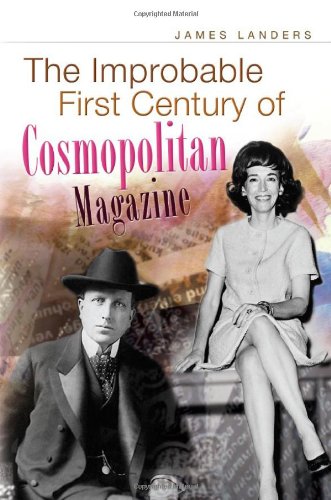


The Improbable First Century of Cosmopolitan Magazine
Book Details
Author(s)
James Landers
Publisher
University of Missouri
ISBN / ASIN
0826219063
ISBN-13
9780826219060
Availability
Usually ships in 24 hours
Sales Rank
#2,072,661
Marketplace
United States 🇺🇸
Ratings & Reviews
No reviews yet — be the first!
No reviews yet.
Description
Â
Today, monthly issues of Cosmopolitan magazine scream out to readers from checkout counters and newsstands. With bright covers and bold, sexy headlines, this famous periodical targets young, single women aspiring to become the quintessential “Cosmo girl.†Cosmopolitan is known for its vivacious character and frank, explicit attitude toward sex, yet because of its reputation, many people don’t realize that the magazine has undergone many incarnations before its current one, including family literary magazine and muckraking investigative journal, and all are presented in The Improbable First Century of Cosmopolitan Magazine. The book boasts one particularly impressive contributor: Helen Gurley Brown herself, who rarely grants interviews but spoke and corresponded with James Landers to aid in his research.
Â
           When launched in 1886, Cosmopolitan was a family literary magazine that published quality fiction, children’s stories, and homemaking tips. In 1889 it was rescued from bankruptcy by wealthy entrepreneur John Brisben Walker, who introduced illustrations and attracted writers such as Mark Twain, Willa Cather, and H. G. Wells. Then, when newspaper magnate William Randolph Hearst purchased Cosmopolitan in 1905, he turned it into a purveyor of exposé journalism to aid his personal political pursuits. But when Hearst abandoned those ambitions, he changed the magazine in the 1920s back to a fiction periodical featuring leading writers such as Theodore Dreiser, Sinclair Lewis, and William Somerset Maugham. His approach garnered success by the 1930s, but poor editing sunk Cosmo’s readership as decades went on. By the mid-1960s executives considered letting Cosmopolitan die, but Helen Gurley Brown, an ambitious and savvy businesswoman, submitted a plan for a dramatic editorial makeover. Gurley Brown took the helm and saved Cosmopolitan by publishing articles about topics other women’s magazines avoided. Twenty years later, when the magazine ended its first century, Cosmopolitan was the profit center of the Hearst Corporation and a culturally significant force in young women’s lives.
Â
           The Improbable First Century of Cosmopolitan Magazine explores how Cosmopolitan survived three near-death experiences to become one of the most dynamic and successful magazines of the twentieth century. Landers uses a wealth of primary source materials to place this important magazine in the context of history and depict how it became the cultural touchstone it is today. This book will be of interest not only to modern Cosmo aficionadas but also to journalism students, news historians, and anyone interested in publishing.