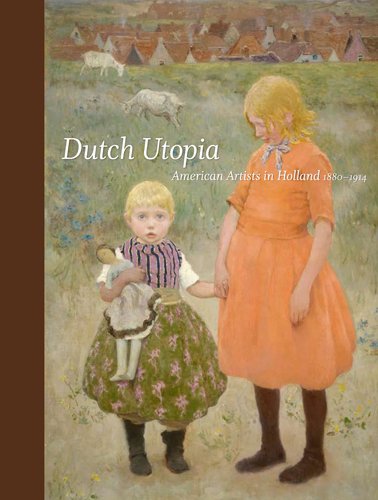


Dutch Utopia: American Artists in Holland, 1880-1914
You can still browse on Amazon. Try another country above.
Organized by the Telfair Museum of Art in Savannah, Georgia, Dutch Utopia examines the appeal of Holland for American artists during this period, through six pivotal themes: the influence of seventeenth-century Dutch painting; the impact of the contemporary Hague School; antimodernism and the American Progressive Movement; points of convergence in national identities; the proliferation of artist colonies in Holland; and the popular construction of “Dutchness†beyond the stereotypes of wooden shoes and windmills. Dutch Utopia includes works by artists who remain celebrated today, such as Robert Henri, William Merritt Chase, and John Singer Sargent, and by painters admired in their own time but less well-known now. These include accomplished women such as Elizabeth Nourse and Anna Stanley, as well as George Hitchcock, Gari Melchers, and Walter MacEwen, who built international reputations with Salon pictures of Dutch landscapes and costumed figures. These artists were among hundreds of Americans who traveled to the Netherlands between 1880 and 1914 to paint and to study. Some lived in Holland for decades, while others stayed only a week or two, but most passed quickly through the major cities to small rural communities, where they created picturesque idylls on canvas.


