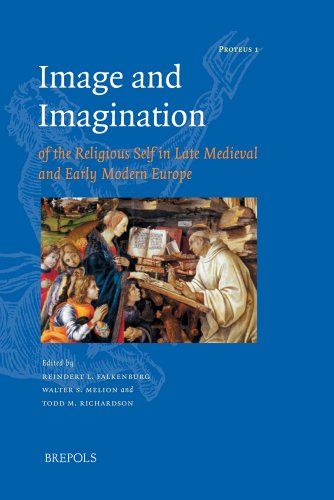


Image and Imagination of the Religious Self in Late Medieval and Early Modern Europe (PROTEUS)
Book Details
PublisherBrepols Publishers
ISBN / ASIN2503520685
ISBN-139782503520681
AvailabilityUsually ships in 24 hours
Sales Rank4,246,297
MarketplaceUnited States 🇺🇸
Description
One of the central and defining beliefs in late-medieval and early-modern spirituality was the notion of the formability of the religious self. Identified with the soul, the self was conceived, indeed experienced, not as an abstraction, but rather as an essential spiritual persona, as well as the intellectual and sensory center of a human being. This volume investigates the role played by images construed as formal and semantic variables - mental images, visual tropes and figures, pictorial and textual representations - in generating and sustaining processes of meditation that led the viewer or reader from outward perception to various forms of inward perception and spiritual discernment. The fifteen articles address the history of the soul as a cultural construct, an internal locus of self-formation where the divine is seen to dwell and the person may experience her/himself as a place inhabited by the spirit of God. Three central questions are approached from various disciplines: first, how was the self-contained soul created in God's likeness, yet stained by sin and as such susceptible both to destructive and redemptive forces, refashioned as a porous and malleable entity susceptible to metaphysical effects and human practices, such as self-investigation, meditative prayer, and other techniques of inwardness? Second, how did such practices constitutive of an inner liturgy prepare the soul - the anima, bride - for an encounter with God that trains, purifies, moulds, shapes, and transforms the religious self? Finally, in this process of self-reformation, how were images of place and space mobilized, how were loci found, and how did the soul come to see itself situated within these places mapped upon itself?
