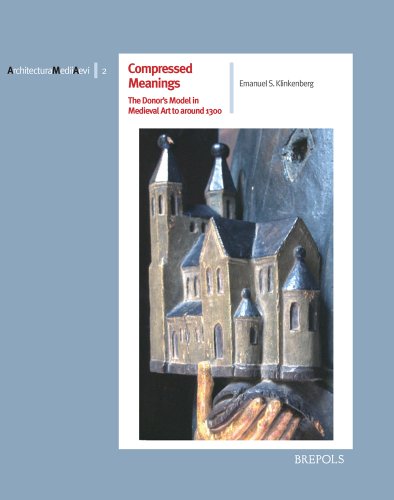


Compressed Meanings. The Donor's Model in Medieval Art to around 1300: Origin, Spread and Significance of an Architectural Image in the Realm of ... and Likeness (ARCHITECTURA MEDII AEVI)
Book Details
Author(s)
E.S. Klinkenberg
Publisher
Brepols Publishers
ISBN / ASIN
250352835X
ISBN-13
9782503528359
Availability
Usually ships in 24 hours
Sales Rank
#8,293,315
Marketplace
United States 🇺🇸
Ratings & Reviews
No reviews yet — be the first!
No reviews yet.
Description
Since the sixth century images have been preserved in Christian art, showing figures of donors presenting a model of the building they had built, rebuilt, repaired, or embellished. Till now these donor models have mainly been studied from the question of their realism, which turned out to be insignificant in most cases. However, this study approaches the donor models in the first place as part of an iconographic tradition. Its origins can specifically shed light on intended meanings, because the first visualization of a certain idea is likely to have been deliberate. Besides this, patrons are considered having the possibility to choose in which way an artist had to represent the building he founded. Thus, donor models could underline the symbolism or the function of a building, give a visual commentary on an image, or express the support for an influential ruler by the way of rendering. Moreover, they documented existing or pretended family ties, legitimized the position of a patron or heightened his prestige. They could also serve as weapon in a fight of competition and - supported by their realism - as visual 'charters'. In the latter case they emphasized the lawfulness and legality of given properties, rights and privileges.
