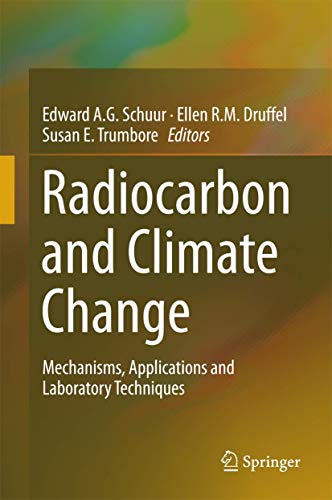


Radiocarbon and Climate Change: Mechanisms, Applications and Laboratory Techniques
You can still browse on Amazon. Try another country above.
Each chapter presents both classic and cutting-edge studies from different disciplines involving radiocarbon and carbon cycling. The book also includes a chapter on the history and discovery of radiocarbon, and advances in radiocarbon measurement techniques and radiocarbon theory. Understanding human alteration of the global carbon cycle and the link between atmospheric carbon dioxide levels and climate remains one of the foremost environmental problems at the interface of ecology and earth system science. Many people are familiar with the terms ‘global warming’ and ‘climate change’, but fewer are able to articulate the science that support these hypotheses. This book addresses general questions such as: what is the link between the carbon cycle and climate change; what is the current evidence for the fate of carbon dioxide added by human activities to the atmosphere, and what has caused past changes in atmospheric carbon dioxide? How can the radiocarbon and stable isotopes of carbon combined with other tools be used for quantifying the human impact on the global carbon cycle?