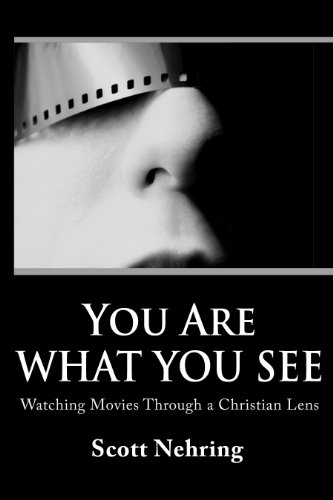


You Are What You See: Watching Movies Through a Christian Lens
Price not available for India
You can still browse on Amazon. Try another country above.
Book Details
Author(s)
Scott Nehring
Publisher
RightLine Publishing
ISBN / ASIN
B003O2SI5U
ISBN-13
978B003O2SI52
Marketplace
India 🇮🇳
Ratings & Reviews
No reviews yet — be the first!
No reviews yet.
Description
Good News Film Reviews film critic Scott Nehring reveals the purpose of movies as a mode of communication, explains the story structure within all well-told stories, and reveals the identity of the ultimate hero.
From author book summary: Our culture has become crude, obtuse, and based in conflict, so enthralled with our freedom of speech we have forgotten our responsibility to say something.
Unfortunately, Christians have reacted by dismissing the Arts as something corrupt and "earthly.� For decades the separation of Christians from the Arts, along with other strict social concerns, has led them to a nearly impassable cultural chasm. Today Christians stand outside the mainstream and seem content to scoff from the sideline rather than join their fellow citizens.
Commonly, the church's public discussion of the Arts merely involves the desire to shut down artistic voices. The censoring impulse is not a characteristic of true faith but a side effect of artistic ignorance. With You Are What You See, film critic Scott Nehring shows Christians that the Arts are not only good for the culture but vital for humanity at large. Involved audience members will improve understanding, expand canvases, and provide open, less conflict-based dialogue between non-Christians and Christians.
The book is written in three sections.
Section One ~ Standards of Indecency: Welcome to Our Culture
Christians are notorious complainers about the trash-culture we live with, but one thing most Christians refuse to see: We only have ourselves to blame. Christians either deny the importance of culture or they claim it is the root of all evil in our country. The fact is that if Christians feel their culture has left them behind, it is only because they stopped trying to keep up.
Section One opens by claiming that "movies matter and they have an impact in our lives.� Film not only entertains and enthralls, it also instructs. Film is a mode of communication and it is critical we pay attention to what is said.
The middle of this Section unravels the variety of ways film can be used to modify our thinking on a variety of subjects. From product placement to political and social agendas, readers are shown there is more on the screen than just flashing lights.
The Section ends by exposing the history of censorship that has stemmed from Christian good intentions and closes with a call for Christians to engage the Arts with an educated and patient approach.
Section Two ~ The Structure of Film: Seeing What's Right in Front of You
In order to understand films, the audience must first understand Story. All films are stories flashed on a wall. The reader is introduced to the narrative structures and mythological archetypes that have been developed by men like Joseph Campbell, Lord Raglan, and Alan Dundes.
Following explanations of act structure, heroic character traits, and a variety of archetypal characters, we explore how these elements relate directly back to the Bible and offer Christian audiences a Biblical approach to watching films.
Section Three: Watching Film ~ The Right Way to Sit There and Do Something
With a Biblical framework in place for viewing cinematic Art, readers are implored to turn their attention to the most vital aspect of film: themselves. Readers are asked to question how they watch movies. Are they too restrictive? Are they gluttonous?
The final chapters also delve into elements within film structure that can be used to discern not only a film's meaning but also its value. To gauge a film's worth is to consider three main parts: Purpose, Content, and Truth.
The book closes with suggestions on what the average audience member can do to impact the art of film and with the caution that life is short and we should only accept Art made to touch our souls not just tickle our fancies.
From author book summary: Our culture has become crude, obtuse, and based in conflict, so enthralled with our freedom of speech we have forgotten our responsibility to say something.
Unfortunately, Christians have reacted by dismissing the Arts as something corrupt and "earthly.� For decades the separation of Christians from the Arts, along with other strict social concerns, has led them to a nearly impassable cultural chasm. Today Christians stand outside the mainstream and seem content to scoff from the sideline rather than join their fellow citizens.
Commonly, the church's public discussion of the Arts merely involves the desire to shut down artistic voices. The censoring impulse is not a characteristic of true faith but a side effect of artistic ignorance. With You Are What You See, film critic Scott Nehring shows Christians that the Arts are not only good for the culture but vital for humanity at large. Involved audience members will improve understanding, expand canvases, and provide open, less conflict-based dialogue between non-Christians and Christians.
The book is written in three sections.
Section One ~ Standards of Indecency: Welcome to Our Culture
Christians are notorious complainers about the trash-culture we live with, but one thing most Christians refuse to see: We only have ourselves to blame. Christians either deny the importance of culture or they claim it is the root of all evil in our country. The fact is that if Christians feel their culture has left them behind, it is only because they stopped trying to keep up.
Section One opens by claiming that "movies matter and they have an impact in our lives.� Film not only entertains and enthralls, it also instructs. Film is a mode of communication and it is critical we pay attention to what is said.
The middle of this Section unravels the variety of ways film can be used to modify our thinking on a variety of subjects. From product placement to political and social agendas, readers are shown there is more on the screen than just flashing lights.
The Section ends by exposing the history of censorship that has stemmed from Christian good intentions and closes with a call for Christians to engage the Arts with an educated and patient approach.
Section Two ~ The Structure of Film: Seeing What's Right in Front of You
In order to understand films, the audience must first understand Story. All films are stories flashed on a wall. The reader is introduced to the narrative structures and mythological archetypes that have been developed by men like Joseph Campbell, Lord Raglan, and Alan Dundes.
Following explanations of act structure, heroic character traits, and a variety of archetypal characters, we explore how these elements relate directly back to the Bible and offer Christian audiences a Biblical approach to watching films.
Section Three: Watching Film ~ The Right Way to Sit There and Do Something
With a Biblical framework in place for viewing cinematic Art, readers are implored to turn their attention to the most vital aspect of film: themselves. Readers are asked to question how they watch movies. Are they too restrictive? Are they gluttonous?
The final chapters also delve into elements within film structure that can be used to discern not only a film's meaning but also its value. To gauge a film's worth is to consider three main parts: Purpose, Content, and Truth.
The book closes with suggestions on what the average audience member can do to impact the art of film and with the caution that life is short and we should only accept Art made to touch our souls not just tickle our fancies.

