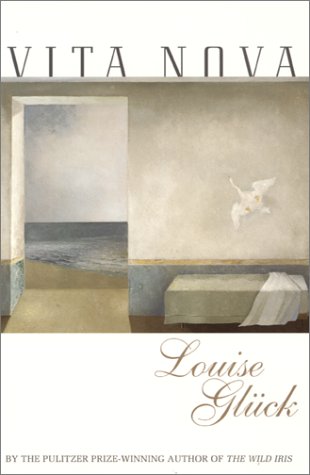


Vita Nova
You can still browse on Amazon. Try another country above.
I have lost my Eurydice,In the end, of course, it's not Eurydice but his own pain that Orpheus immortalizes. "I made a harp of disaster / to perpetuate the beauty of my last love," Glück admits, but this is less a matter of personal glory than it is of sheer survival. And besides, she reminds us, "sometimes / our consolations are the costliest thing."
I have lost my lover,
and suddenly I am speaking French
and it seems to me I have never been in better voice;
it seems these songs
are songs of a high order.
Glück is an excruciatingly honest poet, but not, exactly, a confessional one. Vita Nova holds her life at arm's length, examining its particulars with almost Olympian detachment. Several of these poems include a self-interrogation, rendered in a voice equal parts prosecutor and witness for the defense: "Ask her how he touched her." "Ask her what she remembers." "Ask her if the fire hurts," demands a speaker in "The Burning Heart." Is this Eurydice's story as accident report? Séance? Cross-examination? Elsewhere, her troubles come rendered in a piercing gallows wit. In the volume's final poem, "Vita Nova" (the second of two with that same title), she dreams a dog, then dreams a custody fight with her ex. Be brave, she tells her hypothetical pet--"this is / all material; you'll wake up / in a different world, / you will eat again, you will grow up into a poet!" One senses that for Glück, it's all material--marriage, divorce, life, death, even and especially the ancient drama of myth. These are poems of rebirth, but of a particular kind--not of hope, and certainly not of youth, but of something far more important: poetry itself. In "The Nest," as Glück emerges from her grief, she feels her mind once again engage with the world, thinking "first, I love it. / Then, I can use it." --Mary Park


