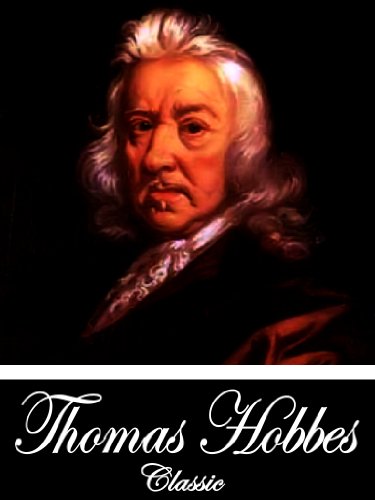
The Art Of Rhetoric and The Art Of Sophistry & A Dialogue Between A Philosopher and A Student Of The Common Laws Of England (Two Books With Active Table of Contents)
Book Details
Author(s)Thomas Hobbes
ISBN / ASINB006L0RO0C
ISBN-13978B006L0RO06
Sales Rank1,338,208
MarketplaceUnited States 🇺🇸
Description
ABOUT THE AUTHOR:
Thomas Hobbes of Malmesbury, in some older texts Thomas Hobbs of Malmsbury, was an English philosopher, best known today for his work on political philosophy. His 1651 book Leviathan established the foundation for most of Western political philosophy from the perspective of social contract theory.
Hobbes was a champion of absolutism for the sovereign but he also developed some of the fundamentals of European liberal thought: the right of the individual; the natural equality of all men; the artificial character of the political order (which led to the later distinction between civil society and the state); the view that all legitimate political power must be "representative" and based on the consent of the people; and a liberal interpretation of law which leaves people free to do whatever the law does not explicitly forbid.
He was one of the founders of modern political philosophy. His understanding of humans as being matter and motion, obeying the same physical laws as other matter and motion, remains influential; and his account of human nature as self-interested cooperation, and of political communities as being based upon a "social contract" remains one of the major topics of political philosophy.
In addition to political philosophy, Hobbes also contributed to a diverse array of other fields, including history, geometry, the physics of gases, theology, ethics, and general philosophy.
Thomas Hobbes of Malmesbury, in some older texts Thomas Hobbs of Malmsbury, was an English philosopher, best known today for his work on political philosophy. His 1651 book Leviathan established the foundation for most of Western political philosophy from the perspective of social contract theory.
Hobbes was a champion of absolutism for the sovereign but he also developed some of the fundamentals of European liberal thought: the right of the individual; the natural equality of all men; the artificial character of the political order (which led to the later distinction between civil society and the state); the view that all legitimate political power must be "representative" and based on the consent of the people; and a liberal interpretation of law which leaves people free to do whatever the law does not explicitly forbid.
He was one of the founders of modern political philosophy. His understanding of humans as being matter and motion, obeying the same physical laws as other matter and motion, remains influential; and his account of human nature as self-interested cooperation, and of political communities as being based upon a "social contract" remains one of the major topics of political philosophy.
In addition to political philosophy, Hobbes also contributed to a diverse array of other fields, including history, geometry, the physics of gases, theology, ethics, and general philosophy.


