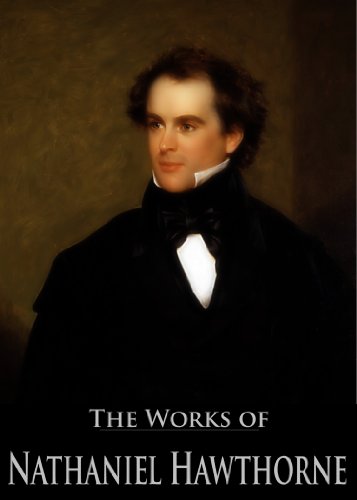


The Works of Nathaniel Hawthorne: Fanshawe, The Scarlet Letter, The House of the Seven Gables, The Blithedale Romance, The Marble Faun and More (16 Books ... Collections With Active Table of Contents)
Price not available for France
You can still browse on Amazon. Try another country above.
Book Details
ISBN / ASIN
B007GFX9DW
ISBN-13
978B007GFX9D6
Marketplace
France 🇫🇷
Description
This collection gathers together the works by Nathaniel Hawthorne in a single, convenient, high quality, and extremely low priced Kindle volume!
Biographies:
A Study of Hawthorne by George Parsons Lathrop, Hawthorne by Henry James, The Life and Genius of Nathaniel Hawthorne by Frank Preston Stearns
Novels:
Fanshawe, The Scarlet Letter, The House of the Seven Gables, The Blithedale Romance, The Marble Faun; or, The Romance of Monte Beni, Doctor Grimshawe’s Secret : a Romance
Short Stories:
Twice–Told Tales 1st Series, 1837, 2nd Series, Mosses from an Old Manse, and other stories, The Snow Image and other stories
Unfinished Tales:
Alice Doane’s Appeal, The Ancestral Footstep: Outlines of an English Romance, The Dolliver Romance, Septimius Felton; or, the Elixir of Life
Non-Fiction:
Life of Franklin Pierce, Chiefly about War Matters
Nathaniel Hawthorne (born Nathaniel Hathorne; July 4, 1804 – May 19, 1864) was an American novelist and short story writer.
Nathaniel Hawthorne was born in 1804 in the city of Salem, Massachusetts to Nathaniel Hathorne and the former Elizabeth Clarke Manning. His ancestors include John Hathorne, the only judge involved in the Salem Witch Trials who never repented of his actions. Nathaniel later added a "w" to make his name "Hawthorne". He entered Bowdoin College in 1821, was elected to Phi Beta Kappa in 1824, and graduated in 1825. Hawthorne anonymously published his first work, a novel titled Fanshawe, in 1828. He published several short stories in various periodicals which he collected in 1837 as Twice-Told Tales. The next year, he became engaged to Sophia Peabody. He worked at a Custom House and joined Brook Farm, a transcendentalist community, before marrying Peabody in 1842. The couple moved to The Old Manse in Concord, Massachusetts, later moving to Salem, the Berkshires, then to The Wayside in Concord. The Scarlet Letter was published in 1850, followed by a succession of other novels. A political appointment took Hawthorne and family to Europe before their return to The Wayside in 1860. Hawthorne died on May 19, 1864, leaving behind his wife and their three children.
Much of Hawthorne's writing centers on New England, many works featuring moral allegories with a Puritan inspiration. His fiction works are considered part of the Romantic movement and, more specifically, dark romanticism. His themes often center on the inherent evil and sin of humanity, and his works often have moral messages and deep psychological complexity. His published works include novels, short stories, and a biography of his friend Franklin Pierce.
Biographies:
A Study of Hawthorne by George Parsons Lathrop, Hawthorne by Henry James, The Life and Genius of Nathaniel Hawthorne by Frank Preston Stearns
Novels:
Fanshawe, The Scarlet Letter, The House of the Seven Gables, The Blithedale Romance, The Marble Faun; or, The Romance of Monte Beni, Doctor Grimshawe’s Secret : a Romance
Short Stories:
Twice–Told Tales 1st Series, 1837, 2nd Series, Mosses from an Old Manse, and other stories, The Snow Image and other stories
Unfinished Tales:
Alice Doane’s Appeal, The Ancestral Footstep: Outlines of an English Romance, The Dolliver Romance, Septimius Felton; or, the Elixir of Life
Non-Fiction:
Life of Franklin Pierce, Chiefly about War Matters
Nathaniel Hawthorne (born Nathaniel Hathorne; July 4, 1804 – May 19, 1864) was an American novelist and short story writer.
Nathaniel Hawthorne was born in 1804 in the city of Salem, Massachusetts to Nathaniel Hathorne and the former Elizabeth Clarke Manning. His ancestors include John Hathorne, the only judge involved in the Salem Witch Trials who never repented of his actions. Nathaniel later added a "w" to make his name "Hawthorne". He entered Bowdoin College in 1821, was elected to Phi Beta Kappa in 1824, and graduated in 1825. Hawthorne anonymously published his first work, a novel titled Fanshawe, in 1828. He published several short stories in various periodicals which he collected in 1837 as Twice-Told Tales. The next year, he became engaged to Sophia Peabody. He worked at a Custom House and joined Brook Farm, a transcendentalist community, before marrying Peabody in 1842. The couple moved to The Old Manse in Concord, Massachusetts, later moving to Salem, the Berkshires, then to The Wayside in Concord. The Scarlet Letter was published in 1850, followed by a succession of other novels. A political appointment took Hawthorne and family to Europe before their return to The Wayside in 1860. Hawthorne died on May 19, 1864, leaving behind his wife and their three children.
Much of Hawthorne's writing centers on New England, many works featuring moral allegories with a Puritan inspiration. His fiction works are considered part of the Romantic movement and, more specifically, dark romanticism. His themes often center on the inherent evil and sin of humanity, and his works often have moral messages and deep psychological complexity. His published works include novels, short stories, and a biography of his friend Franklin Pierce.
