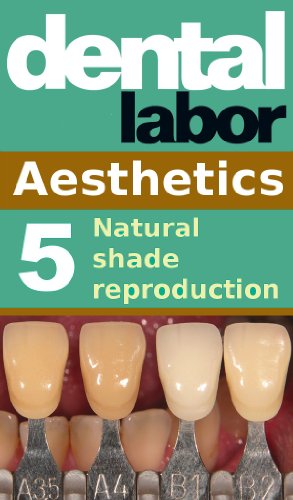


Natural shade reproduction (dental lab technology articles Book 14)
Book Details
Author(s)
Ogata, Akinobu
ISBN / ASIN
B007XC7RIQ
ISBN-13
978B007XC7RI4
Availability
Available for download now
Marketplace
United States 🇺🇸
Description
Implant-supported restorations in the anterior teeth region
The following article by Akinobu Ogata deals with the superstructure of an implant. His main concern is the true-tonature colour reproduction of the aesthetically high-quality anterior superstructure of a bone anchored bridge.
The number of patients who seek dental treatments has skyrocketed worldwide in the last few years. With the increasing request for treatments, different methods and techniques have been developed. Especially in the industrialized countries, the demand for aesthetic treatments like bleaching is on the rise, naturally accompanied by preventative procedures like prophylaxis.
This trend does not reduce the demand for prostheses but rather extends the treatment options. In other words, dentists tend increasingly to the requests for aesthetic treatments by means of periodontal treatments to ensure healthy gums instead of merely concentrating on the filling of cavities.
In the dental office, diagnoses and surgical procedures are performed, for example, guided bone regeneration and the augmentation of the alveolar ridge. The goal is to reproduce the natural gingiva and to regain the alveolar bone so that the natural conditions in the oral cavity are preserved. One of the many patients' requests is the prosthetic restoration, which means that in cases of multiple missing elements, a complete treatment is needed from the crown to the gingiva tissue. One of the long-term solutions is the placement of an implant. The patients expect not only to regain proper function but also to have a perfect symbiosis in colour and morphology.
The dentist has to produce accurate treatment plans and make reliable decisions when it comes to surgical procedures that rely on tried and tested expertise. The design of the prosthesis requires a highly technical standard from the dentist to meet the patient's demands.
Keywords:
aesthetic dentistry, colour, implant prosthetics, soft tissue
The following article by Akinobu Ogata deals with the superstructure of an implant. His main concern is the true-tonature colour reproduction of the aesthetically high-quality anterior superstructure of a bone anchored bridge.
The number of patients who seek dental treatments has skyrocketed worldwide in the last few years. With the increasing request for treatments, different methods and techniques have been developed. Especially in the industrialized countries, the demand for aesthetic treatments like bleaching is on the rise, naturally accompanied by preventative procedures like prophylaxis.
This trend does not reduce the demand for prostheses but rather extends the treatment options. In other words, dentists tend increasingly to the requests for aesthetic treatments by means of periodontal treatments to ensure healthy gums instead of merely concentrating on the filling of cavities.
In the dental office, diagnoses and surgical procedures are performed, for example, guided bone regeneration and the augmentation of the alveolar ridge. The goal is to reproduce the natural gingiva and to regain the alveolar bone so that the natural conditions in the oral cavity are preserved. One of the many patients' requests is the prosthetic restoration, which means that in cases of multiple missing elements, a complete treatment is needed from the crown to the gingiva tissue. One of the long-term solutions is the placement of an implant. The patients expect not only to regain proper function but also to have a perfect symbiosis in colour and morphology.
The dentist has to produce accurate treatment plans and make reliable decisions when it comes to surgical procedures that rely on tried and tested expertise. The design of the prosthesis requires a highly technical standard from the dentist to meet the patient's demands.
Keywords:
aesthetic dentistry, colour, implant prosthetics, soft tissue
