We use cookies to run the site and, with your permission, to measure how it is used. You can accept all of them or deny the ones that are not needed. Read the cookie policy.
⭐ Ratings & Reviews
No reviews yet — be the first!
No reviews yet.
📖 Description
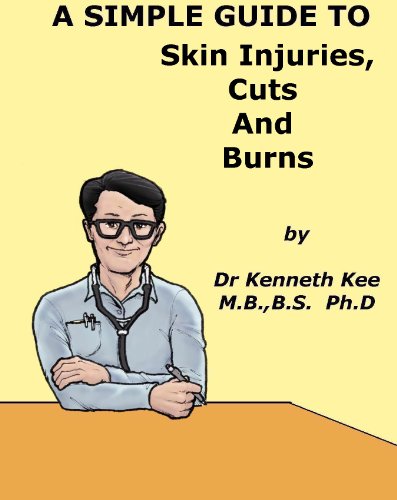
The Skin is the biggest organ in the body because it covers the whole body
What are Skin Injuries?
Skin injuries can be minor as a simple abrasion.
It can also be as dangerous as a 3rd degree burn.
Whatever type it is, the faster the injury is treated the faster is the healing.
What are the types of Skin injuries?
1. Cuts or lacerations –
Cuts open the surface of the skin.
They can cause bleeding from any cut blood vessel in the skin and pain from any cut
All cuts have to be cleaned, closed and blocked from infection by a bandage.
Deep cuts which are longer than an inch or at an area which bend may need stitches.
Sometimes skin closure strips with strong glue may be used instead of stitching.
Abrasions –
Abrasions are superficial scrapings of the skin surface.
There is more pain because more sensitive nerve endings are involved
Punctures –
Punctures are caused by a sharp object piercing the skin and making a small hole.
Punctures can be shallow ones such as a wound from a splinter.
They may also be deep such as from stepping on a nail.
Puncture wounds bleed and are painful.
Bruises –
Bruises are due to blood collected in the tissue under the skin from by broken blood vessels.
Common causes are injuries from falls or trauma from being hit.
A bruise causes black and blue skin.
The skin turns yellowish-green during healing.
There may be pain and swelling.
Burns –
The causes of Burns can from:
1. dry heat such as fire,
2. moist heat such as steam or hot liquids,
3. electricity from electric current
4. chemicals such as hydrochloric acid and
5. the sun such as sunburn.
1st degree burn
The skin becomes red, swollen, painful, and sensitive to touch.
The burn takes 1 to 2 days to heal.
2nd degree burn
The outer and lower layers of the skin are affected.
The skin is painful, swollen, red and form blisters.
The burn area may be watery due to loss of fluid from the cells.
3rd degree burn
The skin will be black and white and charred.
The skin will less painful because the nerves have been destroyed.
First aid in treatment of skin injuries:
1. Clean the wound area with soap and water for at least 5 minutes gently.
2. Cool the wound area with running water or with an antiseptic solution if available
3. Cover the wound area with sterile gauze.
Minor Cuts
1. Wash inside and around the wound gently with soap and water.
2. Put pressure on the cut to stop the bleeding for up to 10 minutes.
3. Put sterile wet gauze or a clean cloth to cover the wound. Dry gauze may stick to the wound.
4. If the wound is still bleeding, apply pressure on the wound again.
5. Call for medical help if the cut still bleeds after pressure has been applied for 10 more minutes. Keep the part of the body with the cut higher than the heart to reduce blood flow.
6. When the bleeding has stopped, and it is clean and dry, apply an antiseptic cream. Apply one or more bandages on the cut.
7. The edges of the cut skin should touch, but not overlap.
Apply a butterfly bandage if available.
Abrasion: Use gauze to dab on an abrasion to keep it clean and dry.
Cover it with gauze and first-aid tape.
Change the bandage every 24 hours.
Punctures with Minor Bleeding
1. Allow the wound bleed to cleanse itself.
2. Remove any sphincter or the object that caused the puncture.
Use clean, sterile tweezers. To sterilize the tweezers hold a flame to the ends of the tweezers. After cooling the tweezers will be wiped with sterile gauze
Do not pull anything out of a puncture wound if there is blood gushing from it or it has been bleeding badly. Call for medical help.
3. Clean the wound area with warm, soapy water 2 to 4 times daily.
4. After drying, apply an antibacterial cream This must be done for several days.
First-Degree Burns and Second-Degree Burns
1. Apply cold water or cloths soaked in cold water on any burned areas for 15 mins .