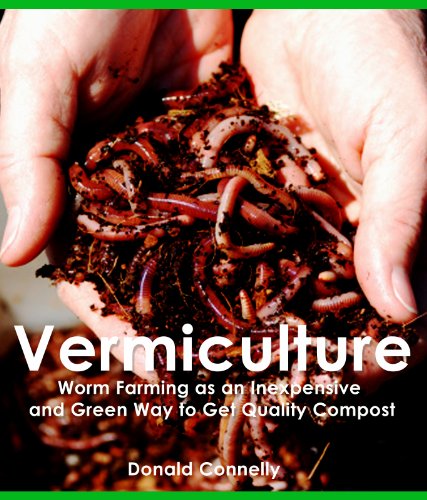


Vermiculture: Worm Farming as an Inexpensive and Green Way to Get Quality Compost
Book Details
Author(s)
Donald Connelly
Publisher
Green Gardening Publishing House
ISBN / ASIN
B00CD80XQI
ISBN-13
978B00CD80XQ4
Sales Rank
#1,187,343
Marketplace
United States 🇺🇸
Description
Vermiculture is an artificial cultivation of earthworms for getting organic compost from them. This multiplication of earthworms is a very simple process and can be handled by anyone easily.
The compost you get from them is called vermicompost. The farm or food waste passes through the body of earthworms and the output comes out in the form of compost which is very rich in humus.
During the process of vermiculture earthworms clean up and make the environment healthy.
There are various species of earthworms, but red worms are commonly used for vermiculture. These worms are also called as red wigglers.
Eisenia hortensis, another species of earthworm is also used for vermiculture. European night crawlers are the common name given to them.
Vermiculture means: cultivation of worms. It is possible because of the special characteristic of the worms. Worms contain both testes and ovaries as sex organs. Which means that worms are both male and female. So that every worm can exchange sperms by overlapping the other worm and then lay eggs. This way their population rate increases automatically. Once they come out of an egg, it takes approximately a year to form a full size worm. Their population rate depends on many factors, such as the available quantity of food, moisture in the soil, PH of soil, salts available in the soil, the capacity of reproducing and dispersing of the worms and temperature of the soil etc.
Vermiculture can be done either on small scale i.e. for home garden or large scale like farms. Water moves through the moist skin of worms to their blood capillaries while breathing through the skin. In case worm gets exposed to bright sunlight for longer time the skin becomes dry and the worm starts suffocating.
Cultivation of earthworms for vermicompost is also possible. For that you need to purchase very small quantity of worms like 40-50 numbers of worms. To increase their population you need to mix cow dung with proportion 1:1 with other farm waste like leaves, grass etc. Keep that mixture in shed and pour some water on it to increase moisture level of the mixture. Then put your 40-50 eartworms in this mixture. You will get about 250-300 times more earthworms within a month or two. These earthworms can be used for preparation of vermicompost.
Donald Connelly (Maine, 1975) strives for a better and greener world. His books want to contribute to an environmentally friendlier way of life. He wants people to know that worm farming is an inexpensive and green way to get quality compost for their gardens.
More about Donald Connelly and his ideas on www.donaldconnelly.com
The compost you get from them is called vermicompost. The farm or food waste passes through the body of earthworms and the output comes out in the form of compost which is very rich in humus.
During the process of vermiculture earthworms clean up and make the environment healthy.
There are various species of earthworms, but red worms are commonly used for vermiculture. These worms are also called as red wigglers.
Eisenia hortensis, another species of earthworm is also used for vermiculture. European night crawlers are the common name given to them.
Vermiculture means: cultivation of worms. It is possible because of the special characteristic of the worms. Worms contain both testes and ovaries as sex organs. Which means that worms are both male and female. So that every worm can exchange sperms by overlapping the other worm and then lay eggs. This way their population rate increases automatically. Once they come out of an egg, it takes approximately a year to form a full size worm. Their population rate depends on many factors, such as the available quantity of food, moisture in the soil, PH of soil, salts available in the soil, the capacity of reproducing and dispersing of the worms and temperature of the soil etc.
Vermiculture can be done either on small scale i.e. for home garden or large scale like farms. Water moves through the moist skin of worms to their blood capillaries while breathing through the skin. In case worm gets exposed to bright sunlight for longer time the skin becomes dry and the worm starts suffocating.
Cultivation of earthworms for vermicompost is also possible. For that you need to purchase very small quantity of worms like 40-50 numbers of worms. To increase their population you need to mix cow dung with proportion 1:1 with other farm waste like leaves, grass etc. Keep that mixture in shed and pour some water on it to increase moisture level of the mixture. Then put your 40-50 eartworms in this mixture. You will get about 250-300 times more earthworms within a month or two. These earthworms can be used for preparation of vermicompost.
Donald Connelly (Maine, 1975) strives for a better and greener world. His books want to contribute to an environmentally friendlier way of life. He wants people to know that worm farming is an inexpensive and green way to get quality compost for their gardens.
More about Donald Connelly and his ideas on www.donaldconnelly.com
