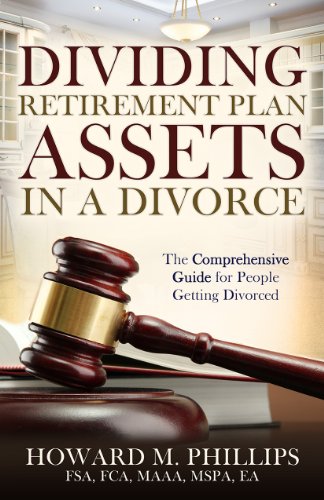


DIVIDING RETIREMENT PLAN ASSETS IN A DIVORCE: A Concise, Comprehensive Pension Guide for people getting divorced
Price not available for India
You can still browse on Amazon. Try another country above.
Book Details
Author(s)
Howard Phillips
Publisher
Howard M. Phillips
ISBN / ASIN
B00IREWM2K
ISBN-13
978B00IREWM26
Marketplace
India 🇮🇳
Ratings & Reviews
No reviews yet — be the first!
No reviews yet.
Description
This EASILY UNDERSTANDABLE Q&A booklet is designed to help you QUICKLY IDENTIFY YOUR RIGHTS relating to dividing up pension and retirement plan assets that you and/or your spouse have accumulated. Along with any property that you own, pension assets will likely be the LARGEST PART of your marital estate.
The information WILL EMPOWER AND ENABLE you to identify the assets that are RIGHTFULLY YOURS and PURSUE THE STEPS TO SECURE them.
UNDERSTANDING what you are entitled to is VITALLY IMPORTANT and is ESSENTIAL for you to know when discussing any issues pertaining to the division of pension assets with your lawyer, accountant or other advisor(s). A MASTER CHECKLIST of the key points you need to address is provided.
TOPICS INCLUDED:
What assets are included in retirement plans, how are they shared and what are they worth to each party? What is a Property Settlement Agreement (PSA) and what does it say about dividing your pension assets? What is a Domestic Relations Order (DRO), what comprises it and how does it define the way pension assets are divided? What is a Qualified Domestic Relations Order (QDRO)? What is the end point for determining the value of pension assets? What is the valuation method of dividing retirement benefits? My advisor said that my spouse has a defined contribution plan? What is that, how is it valued and divided and how does it differ from a defined benefit plan? What are the 'tracing method', 'subtraction method', and 'coverture method' of dividing assets, how does each calculate my claim to the pension assets and which method is best for me to use? What are actuarial assumptions and how are they used? Who pays taxes on shared benefits/accounts? What are the pros and cons of using the Stream of Payments or the Separate Interest method of distribution? Other Q&A’s address Individual Retirement Accounts (IRAs), Non-Qualified Plans, multiple accounts, social security, bankruptcy, existing plan loans, and more.
The information WILL EMPOWER AND ENABLE you to identify the assets that are RIGHTFULLY YOURS and PURSUE THE STEPS TO SECURE them.
UNDERSTANDING what you are entitled to is VITALLY IMPORTANT and is ESSENTIAL for you to know when discussing any issues pertaining to the division of pension assets with your lawyer, accountant or other advisor(s). A MASTER CHECKLIST of the key points you need to address is provided.
TOPICS INCLUDED:
What assets are included in retirement plans, how are they shared and what are they worth to each party? What is a Property Settlement Agreement (PSA) and what does it say about dividing your pension assets? What is a Domestic Relations Order (DRO), what comprises it and how does it define the way pension assets are divided? What is a Qualified Domestic Relations Order (QDRO)? What is the end point for determining the value of pension assets? What is the valuation method of dividing retirement benefits? My advisor said that my spouse has a defined contribution plan? What is that, how is it valued and divided and how does it differ from a defined benefit plan? What are the 'tracing method', 'subtraction method', and 'coverture method' of dividing assets, how does each calculate my claim to the pension assets and which method is best for me to use? What are actuarial assumptions and how are they used? Who pays taxes on shared benefits/accounts? What are the pros and cons of using the Stream of Payments or the Separate Interest method of distribution? Other Q&A’s address Individual Retirement Accounts (IRAs), Non-Qualified Plans, multiple accounts, social security, bankruptcy, existing plan loans, and more.


