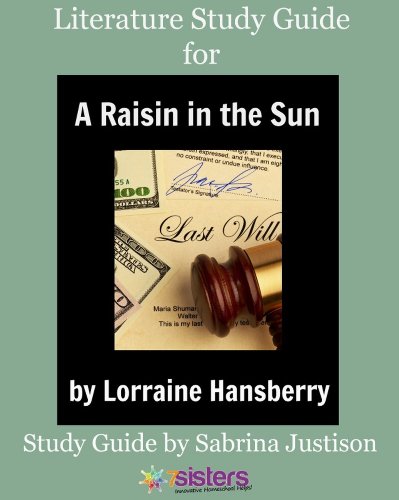


A Raisin in the Sun Liteature Study Guide
Book Details
Author(s)
Sabrina Justison
ISBN / ASIN
B00IVRJR0S
ISBN-13
978B00IVRJR02
Sales Rank
#1,805,102
Marketplace
United States 🇺🇸
Description
Written to accompany American playwright and author Lorraine Hansberry’s iconic 1959 play, this 14-page literature study guide by Sabrina Justison helps you get the most out of A Raisin in the Sun. (NOTE: This is the study guide ONLY. You will need to obtain a copy of A Raisin in the Sun by Lorraine Hansberry separately.)
Literature study guides from 7SistersHomeschool.com inspire students rather than tire them with busywork that kills the story. Instead of attempting to examine every element of a book on the first reading, our study guides choose one or two respected literary devices and use them as a focal point.
Our guides are easy to adapt for use at an Average High School, College Prep or Honors level by choosing to include or omit the enrichment activities and suggested writing assignments.
A Raisin in the Sun Literature Study Guide focuses on the following literary devices:
didactic literature
symbols
dialect
peripety
The suggested writing assignments:
Evaluate the use of symbols
Evaluate a dramatic performance of the play
Examine the effect of dialect on the reader
This study guide enriches the reading of the book without busy-work for your homeschooled high school student.
A Raisin in the Sun Literature Study Guide is EBook curriculum complete with
background information,
vocabulary,
writing prompts
discussion questions
enrichment activities and
answer key.
The guide encourages the reader to appreciate the playwright's masterful use of literary devices without "academic overkill" that ruins the power of the story being told. There are 5 questions on average per scene.
Appropriate for high school literature students at any grade level, the questions are geared toward College Prep level of mastery and articulation.
Too many literature study guides suck the life out of the book. 7SistersHomeschool.com study guides refuse to insult your high school student with page after page of obvious basic comprehension questions (What happened when....?), instead explaining one or two literary techniques that were used with great skill in the book being read, and then helping the reader take note of those literary elements and appreciate them. Critical thinking skills are encouraged. Time is not wasted with busy-work.
Literature study guides from 7SistersHomeschool.com inspire students rather than tire them with busywork that kills the story. Instead of attempting to examine every element of a book on the first reading, our study guides choose one or two respected literary devices and use them as a focal point.
Our guides are easy to adapt for use at an Average High School, College Prep or Honors level by choosing to include or omit the enrichment activities and suggested writing assignments.
A Raisin in the Sun Literature Study Guide focuses on the following literary devices:
didactic literature
symbols
dialect
peripety
The suggested writing assignments:
Evaluate the use of symbols
Evaluate a dramatic performance of the play
Examine the effect of dialect on the reader
This study guide enriches the reading of the book without busy-work for your homeschooled high school student.
A Raisin in the Sun Literature Study Guide is EBook curriculum complete with
background information,
vocabulary,
writing prompts
discussion questions
enrichment activities and
answer key.
The guide encourages the reader to appreciate the playwright's masterful use of literary devices without "academic overkill" that ruins the power of the story being told. There are 5 questions on average per scene.
Appropriate for high school literature students at any grade level, the questions are geared toward College Prep level of mastery and articulation.
Too many literature study guides suck the life out of the book. 7SistersHomeschool.com study guides refuse to insult your high school student with page after page of obvious basic comprehension questions (What happened when....?), instead explaining one or two literary techniques that were used with great skill in the book being read, and then helping the reader take note of those literary elements and appreciate them. Critical thinking skills are encouraged. Time is not wasted with busy-work.


