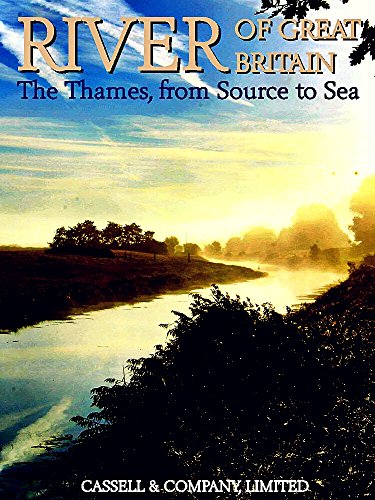


Rivers of Great Britain: The Thames, from Source to Sea. (Illustrations) (New Interesting Ebooks)
Book Details
Author(s)Anonymous
PublisherCASSELL & COMPANY, LIMITED
ISBN / ASINB00NH5OSSU
ISBN-13978B00NH5OSS7
Sales Rank2,247,349
MarketplaceUnited States 🇺🇸
Description
Example in this ebook
Chapter 1
The birds, flowers, and bees around are, doubtless, in their several ways, rejoicing with me in the balmy May morning radiant with warm sunshine. Down the unsullied emerald of the little slope yonder, carpeted with nodding cowslips, daisies, and buttercups, and faintly azured in sheltered spaces with wild hyacinths, I have descended into a rustic glade, not, at its widest, more than fifty yards across, and running, roughly reckoning, north and south. The slope is easy, springing as it does from a verdant bottom to the foot of a low wall; this, pushing aside the glossy sycamore branches, I have leaped from the Canal path, at a gap where the village children, on their recent half-holiday, wastefully cast aside the surplus of their cowslip[Pg 2] harvest to wither and die. But from my present standpoint the low wall is nearly hidden in undergrowth, and by a plentiful intermixture of hawthorn, holly, and ash flourishing on the bank top. The sweet-smelling grass is spangled with daisies and buttercups, though not so profusely as in the field adjacent, which is destined for a crop of hay; and the grove resounds with bird-music set in the rapturous key of the bridal season. And there, a few paces athwart the sward, under the shadow of trembling foliage, is the spot which for centuries was said to be the birthplace of the River Thames. We are at Thames Head, in Trewsbury Mead, in the parish of Cotes, in the county of Gloucestershire, three miles south-west of Cirencester.
The mossy trunk, lying prostrate under the wall on the side of the glade opposite the sylvan slope by which entrance has been effected, invites the opportunity of a more minute observation. Seated thereupon, far from the noisy world, we may make a fair and leisurely start upon that long and interesting voyage from Source to Sea, upon which, in this and succeeding chapters, the reader is invited to embark with confidence and hope. Here, probably, is the identical spot which Peacock, author of the “Genius of the Thames,” had in his mind when he wrote—
“Let fancy lead from Trewsbury mead,
With hazel fringed, and copsewood deep;
Where, scarcely seen, through brilliant green,
Thy infant waters softly creep.”
The friendly branches of a wild rose hustle my elbow, or, rather, would do so, but that a sturdier bramble bough interposes. On the other side of me there is a charming tangle of hazel and blackberry bushes. There is also a more than commonly bushy hawthorn overspreading the wall at a portion where thick ivy covers it. A spreading wild rose is established in the very middle of the glade, which is graced with quite an unusual quantity of large and old hawthorn trees. A strong west wind soughs and sighs in the trees; blackbirds and thrushes, by their liquid notes, blithe and merry, seem to protest against the melancholy undertone, as does a grand humble bee, in magnificent orange-velvet smallclothes, who contributes a sympathetic bass solo as he drones by. But the object to be chiefly noticed at this moment is the aged ash-tree yonder. It is of medium size and no particular shape, though the ivy covering its bole and lower limbs gives it an air of picturesque importance. Ragged hawthorns and brambles surround it. The importance of the tree lies in the circumstance that it marks the spot which the old writers, and many modern authorities following in their footsteps, have pronounced to be the source of the Thames.
To be continue in this ebook............................................................................................................................
Chapter 1
The birds, flowers, and bees around are, doubtless, in their several ways, rejoicing with me in the balmy May morning radiant with warm sunshine. Down the unsullied emerald of the little slope yonder, carpeted with nodding cowslips, daisies, and buttercups, and faintly azured in sheltered spaces with wild hyacinths, I have descended into a rustic glade, not, at its widest, more than fifty yards across, and running, roughly reckoning, north and south. The slope is easy, springing as it does from a verdant bottom to the foot of a low wall; this, pushing aside the glossy sycamore branches, I have leaped from the Canal path, at a gap where the village children, on their recent half-holiday, wastefully cast aside the surplus of their cowslip[Pg 2] harvest to wither and die. But from my present standpoint the low wall is nearly hidden in undergrowth, and by a plentiful intermixture of hawthorn, holly, and ash flourishing on the bank top. The sweet-smelling grass is spangled with daisies and buttercups, though not so profusely as in the field adjacent, which is destined for a crop of hay; and the grove resounds with bird-music set in the rapturous key of the bridal season. And there, a few paces athwart the sward, under the shadow of trembling foliage, is the spot which for centuries was said to be the birthplace of the River Thames. We are at Thames Head, in Trewsbury Mead, in the parish of Cotes, in the county of Gloucestershire, three miles south-west of Cirencester.
The mossy trunk, lying prostrate under the wall on the side of the glade opposite the sylvan slope by which entrance has been effected, invites the opportunity of a more minute observation. Seated thereupon, far from the noisy world, we may make a fair and leisurely start upon that long and interesting voyage from Source to Sea, upon which, in this and succeeding chapters, the reader is invited to embark with confidence and hope. Here, probably, is the identical spot which Peacock, author of the “Genius of the Thames,” had in his mind when he wrote—
“Let fancy lead from Trewsbury mead,
With hazel fringed, and copsewood deep;
Where, scarcely seen, through brilliant green,
Thy infant waters softly creep.”
The friendly branches of a wild rose hustle my elbow, or, rather, would do so, but that a sturdier bramble bough interposes. On the other side of me there is a charming tangle of hazel and blackberry bushes. There is also a more than commonly bushy hawthorn overspreading the wall at a portion where thick ivy covers it. A spreading wild rose is established in the very middle of the glade, which is graced with quite an unusual quantity of large and old hawthorn trees. A strong west wind soughs and sighs in the trees; blackbirds and thrushes, by their liquid notes, blithe and merry, seem to protest against the melancholy undertone, as does a grand humble bee, in magnificent orange-velvet smallclothes, who contributes a sympathetic bass solo as he drones by. But the object to be chiefly noticed at this moment is the aged ash-tree yonder. It is of medium size and no particular shape, though the ivy covering its bole and lower limbs gives it an air of picturesque importance. Ragged hawthorns and brambles surround it. The importance of the tree lies in the circumstance that it marks the spot which the old writers, and many modern authorities following in their footsteps, have pronounced to be the source of the Thames.
To be continue in this ebook............................................................................................................................
More Books by Anonymous


