

The Kama Sutra of Vatsyayana (Illustrated Edition): Kama Sutra (Erotic eBook Classics 1)
The Captivating, Timeless Theme of Sex
In the preface of Kama Sutra, Vatsayana cites the work of previous authors based on which he compiled his own Kama Sutra. He states that the seven parts of his work were an abridgment of longer works by Dattaka (first part), Suvarnanabha (second part), Ghotakamukha (third part), Gonardiya (fourth part), Gonikaputra (fifth part), Charayana (sixth part), and Kuchumara (seventh part). Vatsyayana's Kama Sutra has 1250 verses, distributed in 36 chapters, which are further organized into seven parts. According to both the Burton and Doniger translations, the contents of the book are structured into seven parts like the following:
1. General remarks
five chapters on contents of the book, three aims and priorities of life, the acquisition of knowledge, conduct of the well-bred townsman, reflections on intermediaries who assist the lover in his enterprises.
2. Amorous advances/Sexual union
ten chapters on stimulation of desire, types of embraces, caressing and kisses, marking with nails, biting and marking with teeth, on copulation (positions), slapping by hand and corresponding moaning, virile behavior in women, superior coition and oral sex, preludes and conclusions to the game of love. It describes 64 types of sexual acts.
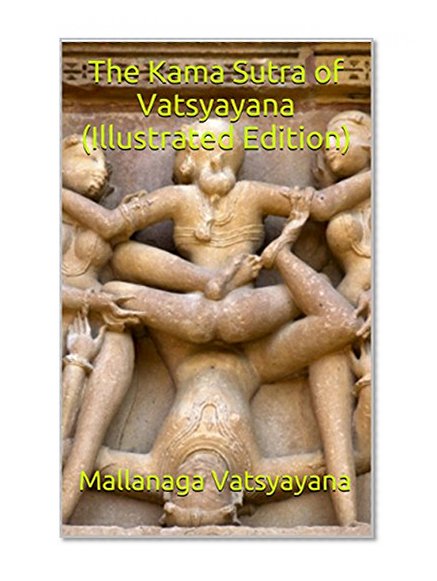
Artistic depiction of a sex position. Although Kama Sutra did not originally have illustrative images, part 2 of the work describes different sex positions.
3. Acquiring a wife
five chapters on forms of marriage, relaxing the girl, obtaining the girl, managing alone, union by marriage.
4. Duties and privileges of the wife
two chapters on conduct of the only wife and conduct of the chief wife and other wives.
5. Other men's wives
six chapters on behavior of woman and man, how to get acquainted, examination of sentiments, the task of go-between, the king's pleasures, behavior in the women's quarters.
6. About courtesans
six chapters on advice of the assistants on the choice of lovers, looking for a steady lover, ways of making money, renewing friendship with a former lover, occasional profits, profits and losses.
7. Occult practices
two chapters on improving physical attractions, arousing a weakened sexual power.
The Best English Kama Sutra Interpretation
Sir Richard F. Burton’s translation of The Kama Sutra remains one of the best English interpretations of this early Indian treatise on politics, social customs, love, and intimacy. Its crisp style set a new standard for Sanskrit translation.
This Modern #1 Seller Classic Erotic Edition
The Kama Sutra stands uniquely as a work of psychology, sociology, Hindu dogma, and sexology. It has been a celebrated classic of Indian literature for 1,700 years and a window for the West into the culture and mysticism of the East.
This Illustrated Classic reprints the authoritative text of Sir Richard F. Burton’s 1883 translation.




