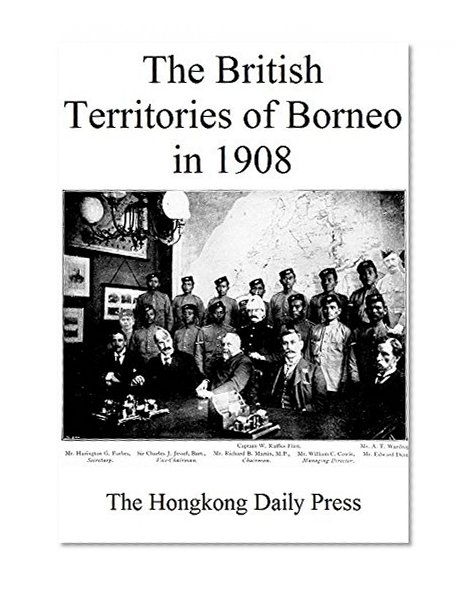


The British Territories of Borneo in 1908
Book Details
Author(s)
The Hongkong Daily Press
ISBN / ASIN
B010NXMFDS
ISBN-13
978B010NXMFD9
Sales Rank
#99,999,999
Marketplace
United States 🇺🇸
Ratings & Reviews
No reviews yet — be the first!
No reviews yet.
Description
“The British Territories of Borneo in 1908†provides a description and statistics for the main British colonies of that Southeast Asian island around 1908. The main British-ruled territories of Borneo were Sarawak, and Sabah. In addition, the Sultanate of Brunei was a British Protectorate, and the island of Labuan, off the coast of Borneo, was also ruled by Britain.
The island of Borneo is the largest in the Malay archipelago. Much of the island is covered by rainforest and it is sparsely inhabited. Mot inhabitants speak Malay languages or other Austronesian languages. The indigenous ethnic groups of the island are known as Dayaks.
In pre-colonial times Borneo was inhabited by many autonomous Dayak communities and chiefdoms, as well as some coastal sultanates. The most powerful of the latter was the Brunei sultanate on the northern coast.
In colonial times Borneo was divided between the British and the Dutch. The Dutch controlled the southern and central parts of the island as part of the Dutch East Indies, while the United Kingdom ruled the northern part of the island.
The British-ruled territories in northern Borneo were Sarawak and North Borneo (or Sabah). The sultanate of Brunei became a British protectorate in the late 19th century, and came under direct British administration in 1906. The island of Labuan, off the northwestern coast of Borneo, was another British colony near to the island.
The British first gained a firm foothold on Borneo when the sultan of Brunei granted British adventurer Sir James Brooke a piece of territory in Sarawak in 1842. Over time the British territory of Sarawak was enlarged until it covered a large part of northwestern Borneo.
Sir James Brooke took the title “Rajahâ€, beginning a dynasty of “White Rajahs†who would rule Sarawak on behalf of Great Britain until the 20th century. After Sir James’ death, his nephew, Sir Charles Johnson Brooke, became the Rajah of Sarawak. The title was passed down to his son, Charles Vyner Brooke, after Sir Charles Johnson’s death.
North Borneo, or Sabah, was located on the northeastern part of Borneo. It was administered by the British North Borneo Company, a royal chartered company similar to the British East India Company or the Hudson’s Bay Company of Canada. North Borneo was acquired by Britain through territorial concessions from the sultans of Brunei and Sulu from 1879 to 1880.
The British colonies of Borneo were geographically large but very sparsely populated- the total population of Sarawak and North Borneo was estimated to be 670,000 around 1908. The population was mostly made up of Malays and Dayaks, with some Chinese, Filipinos and a few hundred Europeans. The Chinese minority were heavily involved in commerce in the British-ruled territories.
But these territories were rich in resources, producing diamonds, gold, silver, coal, and other minerals, as well as agricultural exports such as rubber, tobacco, and lumber. Plantations in North Borneo produced rubber, tobacco, coconuts, lumber (including teak wood), pepper, coffee, and spices. Attempts to introduce opium poppy cultivation in North Borneo, however, were unsuccessful.
During the Second World War Borneo was occupied by the Japanese, who saw it, and the surrounding region, as a source of raw resources. In the 1960s Sarawak and North Borneo (Sabah) gained their independence from the United Kingdom and joined the former British colonies of Malaya to form Malaysia. The small oil-rich sultanate of Brunei became an independent nation in the 1970s. The formerly Dutch-ruled parts of Borneo have become part of Indonesia.
The island of Borneo is the largest in the Malay archipelago. Much of the island is covered by rainforest and it is sparsely inhabited. Mot inhabitants speak Malay languages or other Austronesian languages. The indigenous ethnic groups of the island are known as Dayaks.
In pre-colonial times Borneo was inhabited by many autonomous Dayak communities and chiefdoms, as well as some coastal sultanates. The most powerful of the latter was the Brunei sultanate on the northern coast.
In colonial times Borneo was divided between the British and the Dutch. The Dutch controlled the southern and central parts of the island as part of the Dutch East Indies, while the United Kingdom ruled the northern part of the island.
The British-ruled territories in northern Borneo were Sarawak and North Borneo (or Sabah). The sultanate of Brunei became a British protectorate in the late 19th century, and came under direct British administration in 1906. The island of Labuan, off the northwestern coast of Borneo, was another British colony near to the island.
The British first gained a firm foothold on Borneo when the sultan of Brunei granted British adventurer Sir James Brooke a piece of territory in Sarawak in 1842. Over time the British territory of Sarawak was enlarged until it covered a large part of northwestern Borneo.
Sir James Brooke took the title “Rajahâ€, beginning a dynasty of “White Rajahs†who would rule Sarawak on behalf of Great Britain until the 20th century. After Sir James’ death, his nephew, Sir Charles Johnson Brooke, became the Rajah of Sarawak. The title was passed down to his son, Charles Vyner Brooke, after Sir Charles Johnson’s death.
North Borneo, or Sabah, was located on the northeastern part of Borneo. It was administered by the British North Borneo Company, a royal chartered company similar to the British East India Company or the Hudson’s Bay Company of Canada. North Borneo was acquired by Britain through territorial concessions from the sultans of Brunei and Sulu from 1879 to 1880.
The British colonies of Borneo were geographically large but very sparsely populated- the total population of Sarawak and North Borneo was estimated to be 670,000 around 1908. The population was mostly made up of Malays and Dayaks, with some Chinese, Filipinos and a few hundred Europeans. The Chinese minority were heavily involved in commerce in the British-ruled territories.
But these territories were rich in resources, producing diamonds, gold, silver, coal, and other minerals, as well as agricultural exports such as rubber, tobacco, and lumber. Plantations in North Borneo produced rubber, tobacco, coconuts, lumber (including teak wood), pepper, coffee, and spices. Attempts to introduce opium poppy cultivation in North Borneo, however, were unsuccessful.
During the Second World War Borneo was occupied by the Japanese, who saw it, and the surrounding region, as a source of raw resources. In the 1960s Sarawak and North Borneo (Sabah) gained their independence from the United Kingdom and joined the former British colonies of Malaya to form Malaysia. The small oil-rich sultanate of Brunei became an independent nation in the 1970s. The formerly Dutch-ruled parts of Borneo have become part of Indonesia.
