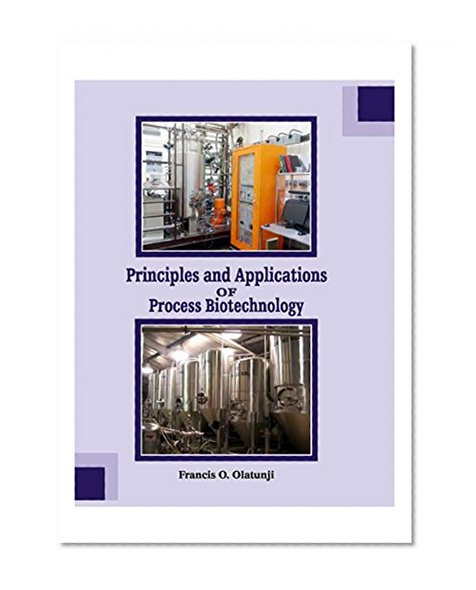


Principles and Applications of Process Biotechnology
Price not available for India
You can still browse on Amazon. Try another country above.
Book Details
Description
Process biotechnology is one important form of the wide discipline of biotechnology. This process biotechnology is also often referred to as chemical biotechnology or industrial biotechnology. This book is the first attempt to differentiate formally between process biotechnology and other forms of biotechnology, viz, medical biotechnology, agro-biotechnology, environmental biotechnology and marine biotechnology. Because of the wide nature of biosystems in the world, there is the need to give prominence to the study of biotechnology. This book attempts to emphasise the study of the principles (scientific) and applications of process biotechnology. It will therefore be easier to put into appropriate compartments research and development studies that belong to process biotechnologies.
The texts in the book have emerged largely from the series of lecture notes on process biotechnology to students of the undergraduate B.Sc (Hons) biochemistry, microbiology, biology, genetics degrees, as well as to students of the undergraduate B.Sc (Hons) in chemical engineering degree undertaking options in biochemical engineering. The texts are also relevant to M.Sc students in biochemistry and biology studies, as well as M.Sc students in chemical engineering with option course in biochemical engineering. It is emphasised that there are more advanced topics in some of the chapters designed for the M.Sc category of students.
The book contains seventeen (17) chapters. The first three chapters, chapters 1-3, deal with basic definitions and classifications of science, technology, engineering, biotechnology and process biotechnology, including classification of food and industrial process microorganisms. Chapters 4 and 5 introduce readers to raw materials for and products from process biotechnology. Chapter 6 deals with simple type fermentation kinetics and aspects of transport phenomena in fermentation systems. This is a precursor of the more complex topics on kinetics as contained in chapters 13 and 14 on batch culture with substrate feed, i.e fed-batch culture fermentation, and plug-flow fermentation. Chapter 7 brings out some of the practical experience of the author in the Federal Institute of Industrial Research, Oshodi on the topic, application of biotechnology in food and fermentation processes. Chapters 8, 9 and 10 on classification of fermentations by reaction types; contamination in continuous fermentation; and instrumentation and control in fermentation industries, show the importance of identifying the principles underlying practical applications. Chapter 11 on scale-up and scale-down of microbiological processes introduces readers to an important aspect in general chemical engineering process design. Chapter 12 on Microbial Genetics and Industrial Fermentation points out to readers the importance of metabolic and permeability regulations of cells in industrial fermentation. Chapter 15 on bioremediation of solids and liquid wastes gives readers some insight into aspects of an important application in bioprocess technology, especially as it relates to environmental pollution control. Chapter 16 on promotion of industrial typing of microorganisms for developing fermentation industries deals with strategies for developing fermentation industries in Nigeria, based on the industrial research experience of the author. Finally, chapter 17 on research notes for developing new biotechnology process systems concludes the book on how to move forward in our developmental work in the country by adopting cutting-edge research, and thereby producing scientists of the caliber of nobel laureates. The inclusion, in each chapter, to contain a section on “Review Questions†would be useful to readers.
The texts in the book have emerged largely from the series of lecture notes on process biotechnology to students of the undergraduate B.Sc (Hons) biochemistry, microbiology, biology, genetics degrees, as well as to students of the undergraduate B.Sc (Hons) in chemical engineering degree undertaking options in biochemical engineering. The texts are also relevant to M.Sc students in biochemistry and biology studies, as well as M.Sc students in chemical engineering with option course in biochemical engineering. It is emphasised that there are more advanced topics in some of the chapters designed for the M.Sc category of students.
The book contains seventeen (17) chapters. The first three chapters, chapters 1-3, deal with basic definitions and classifications of science, technology, engineering, biotechnology and process biotechnology, including classification of food and industrial process microorganisms. Chapters 4 and 5 introduce readers to raw materials for and products from process biotechnology. Chapter 6 deals with simple type fermentation kinetics and aspects of transport phenomena in fermentation systems. This is a precursor of the more complex topics on kinetics as contained in chapters 13 and 14 on batch culture with substrate feed, i.e fed-batch culture fermentation, and plug-flow fermentation. Chapter 7 brings out some of the practical experience of the author in the Federal Institute of Industrial Research, Oshodi on the topic, application of biotechnology in food and fermentation processes. Chapters 8, 9 and 10 on classification of fermentations by reaction types; contamination in continuous fermentation; and instrumentation and control in fermentation industries, show the importance of identifying the principles underlying practical applications. Chapter 11 on scale-up and scale-down of microbiological processes introduces readers to an important aspect in general chemical engineering process design. Chapter 12 on Microbial Genetics and Industrial Fermentation points out to readers the importance of metabolic and permeability regulations of cells in industrial fermentation. Chapter 15 on bioremediation of solids and liquid wastes gives readers some insight into aspects of an important application in bioprocess technology, especially as it relates to environmental pollution control. Chapter 16 on promotion of industrial typing of microorganisms for developing fermentation industries deals with strategies for developing fermentation industries in Nigeria, based on the industrial research experience of the author. Finally, chapter 17 on research notes for developing new biotechnology process systems concludes the book on how to move forward in our developmental work in the country by adopting cutting-edge research, and thereby producing scientists of the caliber of nobel laureates. The inclusion, in each chapter, to contain a section on “Review Questions†would be useful to readers.
