Search Books
God Alone Is the Truth and …

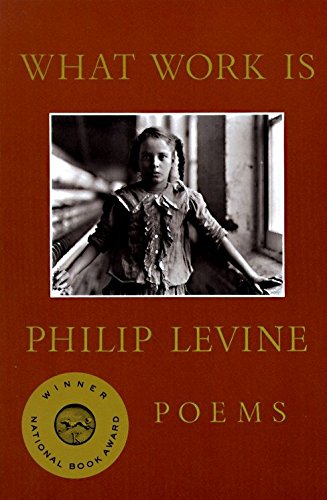
What Work Is: Poems

Author Levine, Philip
Publisher Alfred A. Knopf
Category Paperback
📄 Viewing lite version Full site ›
🌎 Shop on Amazon — choose country
16.95 USD
🛒 Buy New on Amazon 🇺🇸

✓ In Stock.

Share:
Book Details
ISBN / ASIN0679740589
ISBN-139780679740582
AvailabilityIn Stock.
Sales Rank125,629
CategoryPaperback
MarketplaceUnited States 🇺🇸

Description

If there is such a thing as a working man's poet, then Philip Levine is it. Born into a blue-collar family in Detroit, Levine grew up amidst the steel mills and auto factories of Motor City. Laboring in the plants radicalized both Levine's politics and his art; in early works such as On the Edge and Not This Pig, he explored the gritty despair of urban working-class life, a reality that has continued to run through his later poetry as well. In his 1991 National Book Award-winning What Work Is, Levine revisits the scenes of his youth--only now the factories are shut down, the towns that depended on them devastated. In the title poem, Levine conveys a multitude of meaning in the single image of men standing in line waiting for work:
the sad refusal to give in to
rain, to the hours wasted waiting,
to the knowledge that somewhere ahead
a man is waiting who will say, "No,
we're not hiring today," for any
reason he wants.
Factory workers aren't the only subjects here, however; in "Among Children" (an American response to Yeats's "Among School Children") Levine contemplates "the children of Flint, their fathers / work at the spark plug factory or truck / bottled water in 5 gallon sea-blue jugs / to the widows of the suburbs." For these children, he contends, the Book of Job would be the most appropriate reading.

What work is, Levine tells us, is the accretion of a lifetime of experiences, compromises, and disappointments. It is drinking gin for the first time at 14, a premature leap into manhood; it is that first job with its double-edged promise of a "new life of working and earning," and later the unrealized dreams of escaping that life. Levine's poems move back and forth in time, touch on issues of race, religion, education--even gardening--and leave the reader with a moving portrait of working-class life from the 1940s to the present day. --Alix Wilber

Nightmare Hour TV Tie-in Edition
View
First Light
View
The Miles Between
View
Prize Stories 1990: The O. Henry Awards (Pen / O. Henr…
View
Democracy Begins Between Two
View
The Model Locomotive Engineer, Fireman, and Engine Boy
View
Bloodline in the Sand
View
Making America, Volume A, Brief, 2nd Ed + Perfect Unio…
View
Ellis, Becoming a Master Student, 11th Edition Plus My…
View