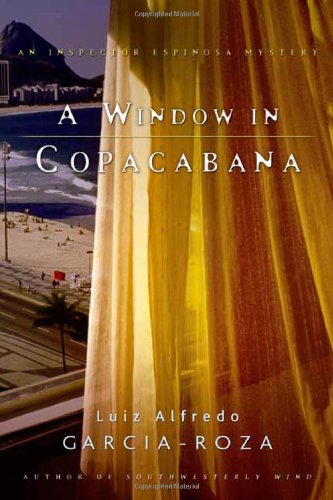
It hardly matters that the three deceased officers weren't popular, or even well known. ("They're all cops who never stood out, who lived hidden lives, and who were as invisible and silent as their deaths.") The fact that each succumbed to "a single point-blank shot," coupled with suspicions that their slayings were somehow connected--by drug dealing, perhaps, or a bribery scheme--makes capturing their assassin crucial, not only to civic peacekeeping but to departmental morale. The stakes increase when those cops' mistresses start dropping violently, as well. Someone, it appears, wants to keep a tight lid on information that was shared between the policemen and their paramours. But who? And what, if anything, can be concluded from the subsequent, supposed suicide leap of a woman who was evidently mistaken by the killer for one of the cops' lovers? As Espinosa wades into the morass of avarice and secrecy at the core of this case, and begins to shed his preconceptions about the crimes, he's also distracted by a pair of young lovelies--one, the wife of a high-ranking government economist, obsessed with that dubious suicide; the other, a smart and resourceful ex-cabaret dancer on the run--whose attentions may do as much to foil his investigation as warm his heart.
Brazilian Garcia-Roza is a patient plotter, exposing each new development with the deceptive indifference of an exotic dancer shedding veils, knowing just how to build and maintain anticipation. And in Espinosa he has found his ideal partner in crime, a clever, compassionate, and oddly bookish, 40-something cop reconciled to the manifold disappointments of life and serene in the face of human tragedy. Although this author denies his cops, other than Espinosa, much depth of personality, A Window in Copacabana's Hitchcockian twists, sensual atmosphere, and unwillingness to deliver clichéd "perfect" justice in the end all make it an excellent entry in one of the coolest, most captivating crime series going. --J. Kingston Pierce