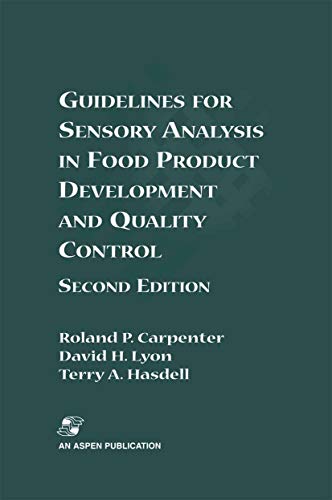


Guidelines for Sensory Analysis in Food Product Development and Quality Control
Book Details
Author(s)
Carpenter, Roland P.
Publisher
Springer
ISBN / ASIN
B000WDV9FK
ISBN-13
978B000WDV9F3
Availability
Available for download now
Category
Kindle Edition
Marketplace
United States 🇺🇸
Description
Sensory testing has been in existence ever since man started to use his senses to judge the quality and safety of drinking water and foodstuffs. With the onset of trading, there were several developments that led to more formalized testing, involving professional tasters and grading systems. Many of these grading systems are still in existence today and continue to serve a useful purpose, for example in assessing tea, coffee, and wines. However, there has also been a growing need for methods for well-repli cated, objective, unbiased sensory assessment, which can be applied rou tinely across a wide range of foods. Sensory analysis seeks to satisfy this need. Sensory analysis is not new to the food industry, but its application as a basic tool in food product development and quality control has not always been given the recognition and acceptance it deserves. This, we believe, is largely due to the lack of understanding about what sensory analysis can offer in product research, development, and marketing and a fear that the discipline is "too scientific" to be practical. To some extent, sensory scien tists have perpetuated this fear by failing to recognize the industrial con straints to implementing sensory testing procedures. These Guidelines are an attempt to redress the balance.



![Bow Down to the Wolf King [Royal Alphas 1] (Siren Publishing Everlasting Classic ManLove)](https://www.ebooknetworking.net/books/B00/KPV/medB00KPVMQ42.jpg)